The BPS DSEP Conference 2019: A Rookie’s Perspective

Zoe Moffat, Glasgow Caledonian University, @ZoeMoffatSP

            Last month marked my first BPS DSEP Annual Conference – and what an experience! After a rather bumpy journey to Solihull the day before (ten hours and three airports later…) I arrived at the venue, bright eyed and bushy tailed with fellow students and staff from Glasgow Caledonian University. The conference, themed on ‘new horizons in sport, physical activity and performance psychology’ sought to offer an opportunity for practitioners to network, learn and discuss innovative ideas from both research and applied perspectives. I perceived it to do just that, across two action-packed days of keynote speakers, interactive workshops, panel discussions and presentations on a wide range of topics.

Day One

Day one opened with a warm welcome from the DSEP committee, before the first keynote was presented by Dr David Tod. His presentation titled ‘Psychology without psychologists: the goal of professional training’ highlighted the importance of managing our own ego’s in professional practice, and getting comfortable being uncomfortable when reflecting on our own behaviour. In this essence, the idea of questioning ‘whose needs are being served?’ appeared particularly powerful.

After a short break, colleagues and I delivered a symposium on our work at GCU (a shameless plug!) exploring the theme of person or performer. On a more serious note, for those considering presenting at this years conference, be that your research findings or applied experience: do it. Presenting last year was a personal highlight and an experience I thoroughly enjoyed. Fellow delegates provided a supportive environment, characterised by high engagement and intriguing questions that will undoubtedly be of benefit.

            After more interesting oral presentations, poster sessions, and lunch, I attended an interactive workshop by the SportWales team on creating thriving environments. The interactive workshops provided the opportunity for diverse groups from trainee’s to experienced practitioners, to discuss how they would go about ‘growing culture’. The team then presented honest reflections on how they went about achieving this in practice, and the time and energy it required. To close the day, Professor Diane Crone delivered a final keynote, reiterating the power of physical activity and less conventional modes of consulting, for example the use of art.

Day Two

            After a great evening at the conference dinner it was time for day two. In the third keynote of the conference, alongside presenting information on challenging issues such as suicide in sport, Dr Allan Johnston posed an interesting question for the field – how do we as sport and exercise psychologists present ourselves? Across the conference, I perceived most individuals to be seeking to provide support to those operating in sport and exercise environments at a person and performer level, be that athletes, coaches or other practitioners. Dr Johnston’s opening slides though – highlighted that this may not be what google (or the world) think!

            A highlight from the conference, was Dr Andrew Manley’s workshop on the use of escape rooms to facilitate learning. Andrew enthusiastically delivered the ‘escape room’ he and his team developed, which brought research methods to life in a series  of break-in challenges. A fun, different experience, the findings from their research also seem to suggest that these experiences  facilitate real-world performance improvements (there’s a paper coming!) Attending the workshop has sparked a range of conversations and personal reflections as to how we as psychologists, can make content come alive in both educational and applied environments.

The final keynote of the conference, was delivered by Dr Chris Harwood who shared critical reflections on operating in youth sport environments and our role as psychologists within them. The conference later concluded with an intriguing panel discussion on practicing in disability and Paralympic sport. Dr Jamie Barker and the panellists interactions provided me with two key messages. First, it is always okay to ask the question and that it is always more productive than guessing or assuming. Second, a somewhat fitting message for a trainee, that it is okay to ‘get it wrong’ and that you probably will, the key is in being honest and authentic about such transgressions.

            To conclude, Solihull provided a fantastic opportunity to meet new people, share knowledge, ask questions and consider new ideas across multiple areas. There were far too many amazing presentations to account for in a blogpost, but every presentation I attended, and I am sure those I didn’t, offered a wealth of knowledge and insight for those attending. A special mention here to the DSEP Committee and conference volunteers who did an amazing job organising the conference and creating a warm, friendly and exciting atmosphere for all attendees. The next BPS DSEP Conference is in Liverpool this year (30th November-1st December 2020) and for anyone interested, I’d definitely recommend.

A network like no other: 15th Annual ENYSSP European Network of Young Specialists in Sport Psychology Conference

Beth Yeoman MBPsS, BPS QSEP Stage II Trainee, @beth_yeoman

Matt Shaw MBPsS, BPS QSEP Stage II Trainee, InnerDrive, @mattshawpsych

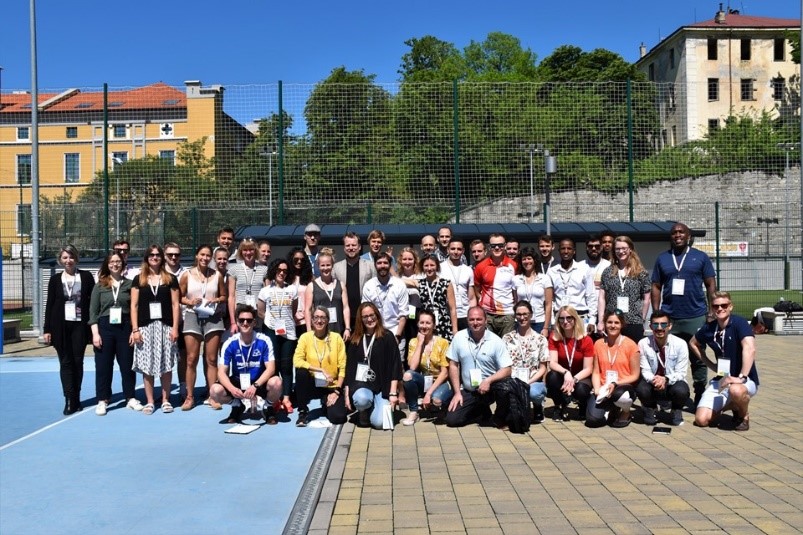
On Thursday 23rd May we arrived in sunny Trieste, Italy along with 130 fellow delegates from 23 countries for the 15th annual European Network of Young Specialists in Sport Psychology (ENYSSP) Conference. Some might be wondering who or what ENYSSP is. The aims of ENYSSP are to give support in education, research, professional practice and service delivery to young people with official qualification or an interest in the field of Sport and Exercise Psychology. As new members to ENYSSP this was our first experience of what the network had to offer and after three days I think it’s safe to say we were impressed.

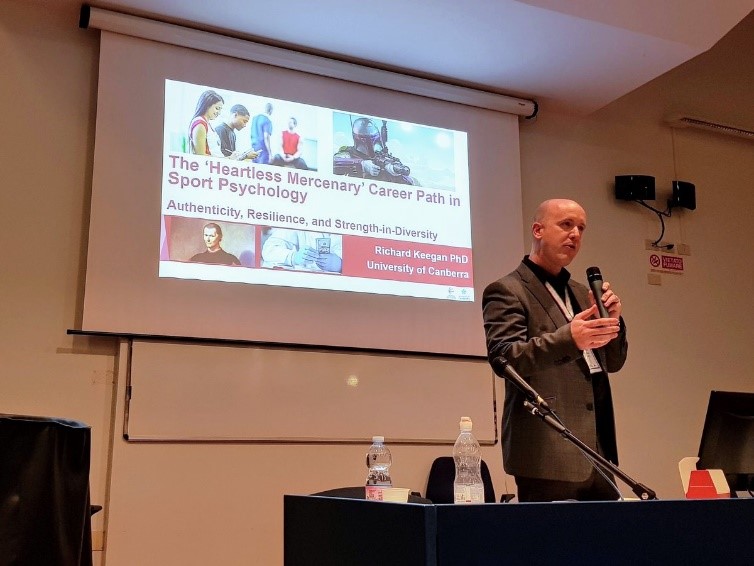
Three keynotes were delivered over the conference. The first was delivered by Dr Claudio Robazza, Associate Professor in the Department of Medicine and Aging science at the University of Chieti-Pescara, Italy who spoke about emotional self-regulation for performance enhancement. The second was delivered by Dr Rita F. de Oliveira whose key note was titled: ‘This girl can be active! … can’t she?’ Within the key note Dr Oliveira described Sport England’s “This Girl Can” campaigned and evaluated its effectiveness in facilitating participation. The last key note was delivered by Dr Richard Keegan of the University of Canberra, Australia. Dr Keegan is a practicing Sport Psychologist and the author of ‘Being a Sport Psychologist’. Dr Keegan’s keynote was titled: ‘The ‘Heartless Mercenary’ Career Path in Sport Psychology: Authenticity, Resilience and Strength-in-Diversity’.

A number of insightful themes came out of Dr Keegan’s key note. Firstly, it was suggested that to be an authentic practitioner it is important to view yourself as a person who is collecting skills, collecting experiences, becoming more capable and remaining the constant throughout all experiences. Secondly, it is advantageous to be ‘antifragile’ by building a career that allows you to push yourself out of your comfort zone. Thirdly, to not be the practitioner who plays the ‘gets results, guaranteed results’ role, but rather be an ethical practitioner who takes their time to empower not only their athletes but themselves too. Fourthly, to love the journey that we are on and at times to view it as a long game, a game that works in our favour the longer we play it.

A welcomed part of the conference was this year’s addition of a panel discussion where we heard from two of Italy’s elite athletes about their journey to, during and after professional sport. With plenty of opportunities to ask questions, it was great to learn more about maintaining elite performance but also transitioning out of it too.  

The three days were also populated with a variety of interactive workshops that covered current considerations in Sport Psychology. There was a mix of research focussed workshops, e.g. ‘Conducting research in sport and exercise psychology – challenges and potential solutions’ and applied practice focussed workshops, e.g. ‘Cracking the coach code: Building trust with old school coaches’.

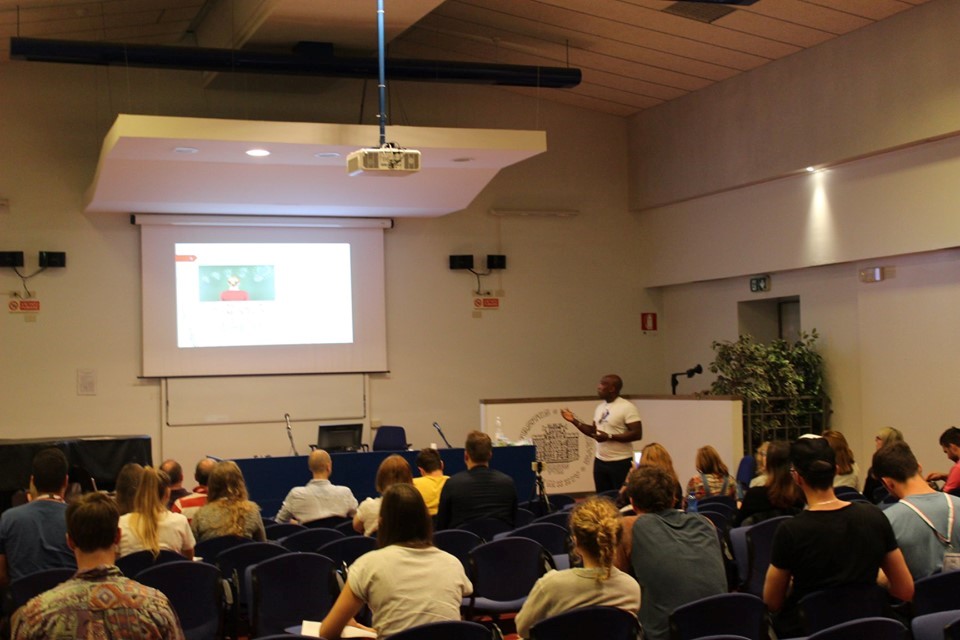
A highlight from the conference was the engaging workshop, “Introduction to mindfulness practice; measuring and understanding the quality of mindfulness”, by Sunny Nwabueze from London. The workshop began with Sunny sharing his personal experiences of mindfulness and key findings from his dissertation on mindfulness practice. We then got the chance to have a go at practicing informal and formal methods of mindfulness followed by discussions of how the experience was for us. As mindfulness is growing in the western culture and within sport, this workshop was valuable in demonstrating how the technique can be implemented into sport practice. 

As well as the insightful key notes and interactive workshops, the conference was a great opportunity to make new connections within the Sport and Exercise Psychology world. Networking was a large focus of the conference with social activities incorporated within the three days. As the majority of delegates were in a similar position to ourselves in that they were just starting their careers in Sport and Exercise Psychology, these networking opportunities were valuable in building contacts, sharing knowledge and sharing experiences.

Furthermore, the keynote presenters were also willing to engage in all activities and share with you their personal journeys in Sport Psychology. Having this opportunity to speak with these individuals who are experts in their fields is a rare occasion and therefore was most definitely a highlight from the conference. Because of these networking opportunities we have come away from the conference with contacts all over the world, which is invaluable in this field of work.

In summary, not only was Trieste great fun and a beautiful city, the conference had great keynotes, workshops, discussions and most importantly great delegates too. The next ENYSSP conference is in Ghent, Belgium from the 16th – 18th  April 2020. We look forward to attending next year and seeing you there too. If you would like to find out more about ENYSSP or next year’s conference, then feel free to contact our UK representative Pete Jackson, pete@petejackson.co.uk, (www.petejackson.co.uk)

Correspondence:

Beth Yeoman, bethyeoman12@gmail.com

Matt Shaw, mshaw@innerdrive.co.uk (www.innerdrive.co.uk)

Pushing Boundaries: Staffordshire University Performance Psychology Conference

How Staffordshire University’s 2018 Performance Psychology Conference gave us a window into the future of work within the field. 

Pete Jackson, MBPsS, BPS QSEP Stage II Trainee, Pete Jackson Sport Psychology, London, @petejackson

Sam Woods, MBPsS, BPS QSEP Stage II Trainee, Sam Woods Performance Psychology, Leicester, @Swoodspp 

On Wednesday 3rd October 2019 some of our industry’s best and brightest descended on the Staffordshire University campus for the third annual performance psychology conference. It would be remiss of us not to mention the success of this event in recent years, having evolved into an innovative, mind-opening and must-attend fixture in the sport psychology calendar.

Keynotes were delivered by the Head of Sport Psychology at the English Institute of Sport (EIS), Dr. Kate Hays, and Director of the Taught Doctorate in Sport and Exercise Psychology at Glasgow Caledonian University, Dr. Paul McCarthy. In between, there were workshops, delivered on motivational interviewing, Mindflick’s ‘Spotlight Profiling’ and managing trauma. There were also five minute ‘lightening round’ bolts of inspiration from those involved in Olympic rowing, professional football, and crime and policing.

The conference started with Dr. Kate Hays. She provided an insight into the road to Rio and then changes for the road to Tokyo. For example, the EIS has regulated psychological support across Olympic sports, such as systematic case formulation and a personality profiling process. Other changes include an increase in pressure training andstrengthening relationships within the wider teams involved in performance. This has culminatated in the development of ProjectThrive, which focuses on the creation of environments that develop the person as well as the performer.Lastly,  Dr. Kate Hays announced, there will be a 70% increase in the number EIS psychologists working towards Tokyo 2020 compared to the Rio 2016 cycle, showing the increased psychological support for our Olympic athletes.

Spotlight with Tim Pitt was a whistlestop tour of the theory underpinning Mindflick’s approach to profiling. A unique and new look into profiling, Spotlight delves into behavioural style and mindset to create an individual performance preference. Backed by theory and research the model gives plenty of areas to underpin 1-2-1 work with an athlete, as well as a quick insight into them as an individual. Each delegate at the conference left with their own unique profile and information on why this might benefit consultancy with athletes.


Steve Eaton delivered another insightful workshop on trauma in high performance teams. His military background enabled him to speak from experience around an area many delegates knew little about. Steve uses and promotes the use of  Trauma Risk Management (TRiM),a model which has been used in business and other high performing environments. TRiM is a Bio-Psycho-Social tool in which friends, colleagues or family can learn to help individuals through trauma. A key statistic that stood out to attendees was that 75% of people will experience trauma in their lives, with the percentage increasing in high performing teams and athletes due to them experiencing more risk factors such as a traumatic injury experience.

A running theme throughout was a sense that sport & exercise psychology is starting to push its traditional boundaries. As Dr. Paul McCarthy pointed out in his keynote, 90% of our division’s competencies are shared with neighbouring psychology specialisms. This may explain why Dr. Kate Hays announced that EIS psychologists are moving away from just 1-2-1 mental skills training, towards more systemic, cultural and wellbeing challenges. Previously there had been a focus on performance (certainly the case for Rio). However, under ProjectThrive there is a more balanced approach with individual differences and competition support being higher priorities on the road to Tokyo.

Another sign that sport psychology is pushing out into new territories includes its influence in non-sport industries where performance and wellbeing are paramount. Many of the presenters didn’t just work in sport. Workshops were varied and ranged across an array of performance domains and topics. Steve Eaton from DNA Definitive spoke about managing trauma in military settings, Dr. Tim Pitt shared how Spotlight has been used in corporate settings, and Dr. Jeff Breckon from Sheffield Hallam University delivered a motivational interviewing workshop inspired by experiences in clinical settings with addiction and other disorders. Due to most attendees being trainees on BASES or the BPS, the variety of workshops sparked interest and curiosity into new areas for further learning and development. In addition to these corporate, military and clinical influences at the conference, we also listened to Jenni Jones, a performance psychologist for Hampshire Constabulary on the importance of building healthy identities in law enforcement.

Part of breaking down boundaries is not just about sport psychologists ‘pushing out’ into other areas of performance, but also letting others in. In his ‘lightening round’ talk, Planet K2 and British Rowing’s Chris Shambrook suggested we needn’t always be the “super heroes” and talked about training others in our multi discplinary teams to deliver psychological support. Likewise, Stoke City FC’s performance psychologist Joe Dixon talked about handing over the reigns to others “in order to evolve”.

In summary, the conference painted a hopeful picture of more jobs, in more industries, armed with more tools. It was an optimistic and exciting window in to what our discipline might look like in the future, and we look forward to returning next year for another inspiring shot in the arm.

Correspondence:

Pete Jackson, pete@petejackson.co.uk (www.petejackson.co.uk)

Sam Woods, sam@swoodspp.co.uk (www.swoodspp.co.uk)